Built with SODAX





















Bound
For Bitcoin-native applications that want to give BTC holders trading and money-market lending across 18+ networks, self-custodied from entry to settlement, with no wrapping and no centralized exchange in the middle.
Flint
At a glance
- Deposit any asset from any integrated chain
- Each vault undergoes a rigorous risk framework by 9 Summits
- Yield is distributed every week with full on-chain traceability
- Non-custodial, audited smart contracts
For RWA vaults and protocols that want depositors to fund with any asset from any integrated chain, routed to the asset of choice, and deposited in a single step.
About Flint
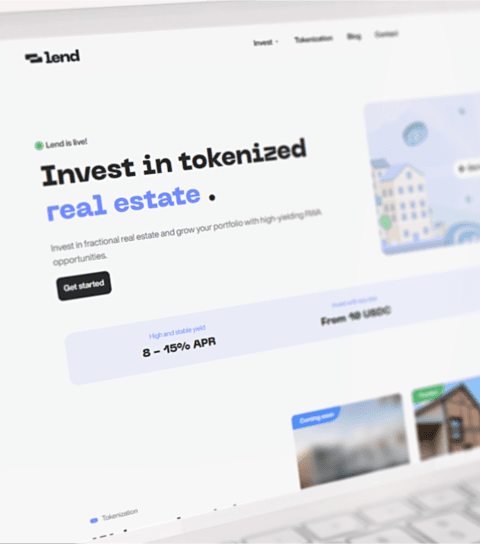
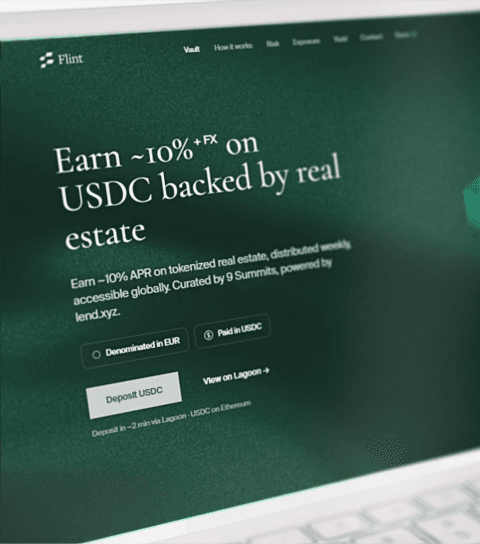
Flint vaults invest in tokenized real-world assets, real estate bonds and private credit, to generate stable, uncorrelated yield fully onchain.
Built on Lagoon Finance and curated by 9Summits, Flint gives allocators non-custodial exposure through audited smart contracts, with roughly 10% APR paid in USDC and distributed weekly.
The Challenge
An RWA vault denominated in USDC faces a funding barrier at the front door:
Depositors hold many assets on many chains. The vault takes USDC, but capital rarely starts there.
Manual swapping and bridging adds drop-off. Getting to USDC on the right chain before depositing is several steps of friction.
Building multi-chain routing in-house is heavy. Sourcing any asset from any chain and converting it to USDC is real infrastructure to maintain.
The Solution
Flint integrated the SODAX Swap API so depositors can fund the vault with any asset from any integrated chain, routed to USDC and deposited in one flow. The integration is built around these capabilities:
Deposit Any Asset from Any of the 20+ Integrated Chains
Depositors are no longer limited to holding USDC on one network. Any asset on any integrated chain can be used to enter the Flint vault.
Auto-Routed to USDC
The SODAX Swap API routes the incoming asset to USDC behind the scenes, so the conversion the vault requires happens automatically rather than as a manual pre-step.
One-Step requestDeposit into the Vault
Routing and deposit are combined into the Flint vault requestDeposit flow, so a depositor completes funding in a single action instead of swapping, bridging, and then depositing.
Powered by the SODAX Swap API
By integrating the SODAX Swap API, Flint gains cross-chain sourcing and conversion without building or maintaining that routing infrastructure itself.
The Results
1. Swift Cross-Chain Deposits
Depositors can enter the Flint vault from wherever they already hold assets, removing the swap-and-bridge steps that would otherwise sit before a deposit.
2. A Wider Pool of Depositors
By accepting any asset from any integrated chain, Flint opens the vault to capital that would previously have been blocked by the USDC-only requirement.
3. Infrastructure Without the Overhead
Flint gains cross-chain routing to USDC through the SODAX Swap API, avoiding the cost of building and running that layer in-house.
SODAX Integration
Foundation Layer
@sodax/sdk (Swap API)
Flint uses the SODAX Swap API to quote and route any asset to USDC, then settle the deposit into the vault.
Flint integrated the SODAX Swap API to power the vault's requestDeposit flow. Any asset from any integrated chain is routed to USDC and deposited into the vault in a single step.