Built with SODAX






















Bound
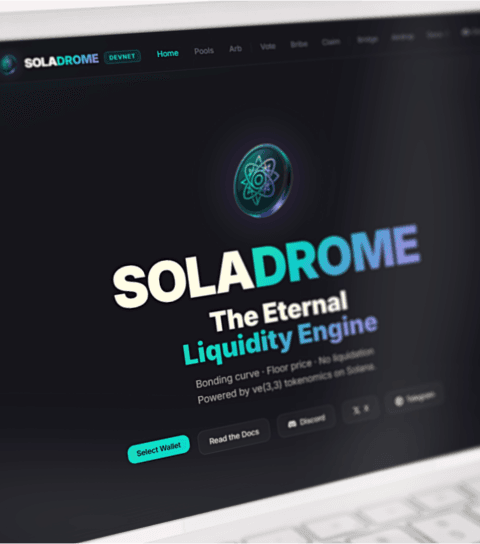
For Bitcoin-native applications that want to give BTC holders trading and money-market lending across 18+ networks, self-custodied from entry to settlement, with no wrapping and no centralized exchange in the middle.

LightLink Network
At a glance
- 2 weeks to integrate
- Gasless chain-abstraction preserved
- 18+ networks now accessible
- No user-visible bridging delays
For networks that want to give apps access to cross-network liquidity and execution without maintaining bespoke bridging or liquidity coordination.
About LightLink Network
LightLink is an Ethereum Layer 2 designed to support scalable, low-friction applications through chain abstraction and gasless transaction infrastructure.
As the network evolved, its focus expanded toward enabling applications to access cross-network assets, liquidity, and execution. This is done without exposing end users or businesses to gas management or multi-chain operational complexity.
The Challenge
LightLink had ETH, LL and stablecoins natively, but apps couldn't offer BTC, SOL, AVAX or other major assets without leaving the network.
Asset coverage was limited. Applications could not offer native access to assets like BTC, SOL, or AVAX on LightLink.
Execution paths were slow. Users relied on transfers with long confirmation times to reach assets on other networks.
Liquidity was fragmented. Markets were shallow and pricing inconsistent, even when assets were made available.
Developer overhead grew. Custom integrations and ongoing liquidity management added work.
The Solution
SODAX integrated at the LightLink network layer, enabling applications deployed on LightLink to access cross-network liquidity and execution without managing local pools.
Unified liquidity layer
LightLink integrated SODAX's Core SDK at the network level, allowing applications on LightLink to access deep liquidity across SODAX's 18+ connected networks, including Solana, Sui, Avalanche, Arbitrum, and Stellar. Applications no longer need to fund or manage local liquidity pools to offer multi-asset access. Impact: Users no longer wait 24 hours or navigate bridge flows. They specify an intent like "I want SOL," and trades settle with deep liquidity, low slippage, and no manual bridging steps.
Native asset representation
SODAX introduced native asset representations for LightLink, allowing applications to expose assets like SUI.LL, BTC.LL, and AVAX.LL under LightLink-native naming standards. Settlement remains fully compatible with the broader SODAX ecosystem. Impact: Users interact with familiar, network-native asset names and trade directly, without needing to understand wrapped tokens, bridges, or cross-network mechanics.
Intent-based execution
Applications on LightLink execute trades through a network of solvers, which source liquidity across all connected networks instead of relying on shallow local AMMs. Execution is coordinated externally while the user interaction and settlement remain native to the LightLink environment. Impact: Users can execute both small and large trades with consistent pricing and minimal slippage.
Direct SDK integration for builders
Protocols building on LightLink can integrate SODAX through the Core SDK to support cross-network execution without building bespoke coordination infrastructure. LightLink apps already use SODAX to offer index-style products that execute exposure across assets like BTC, ETH, SOL, and LL in a single user action.
The Results
Expanded asset access
LightLink went from a few native assets (ETH, LL, stablecoins) to liquidity across SODAX's 18+ connected networks, including BTC, SOL and AVAX.
Eliminated bridge friction
Users skip manual bridges and long confirmation paths. Swaps run through SODAX with native UX and predictable settlement.
New app capabilities
Apps on LightLink can offer multi-asset products, like exposure across BTC, ETH and SOL in one action, without funding liquidity, running bridges or custom routing.
Proven traction
LightLink hosts 50+ active apps and ~67,000 transactions a day. SODAX adds cross-network execution and liquidity at the network layer.
Feedback
"With SODAX, we can offer DeFi traders access to a wider range of assets without requiring them to leave the LightLink ecosystem. It enables us to support cross-chain index pools without managing complex infrastructure, making it a strong complement to LightLink's mission."
Ecosystem Lead, LightLink
Built on the SODAX API
One API for cross-network execution and liquidity. Start free with your own API key.