Built with SODAX

























Bound
For Bitcoin-native applications that want to give BTC holders trading and money-market lending across 18+ networks, self-custodied from entry to settlement, with no wrapping and no centralized exchange in the middle.
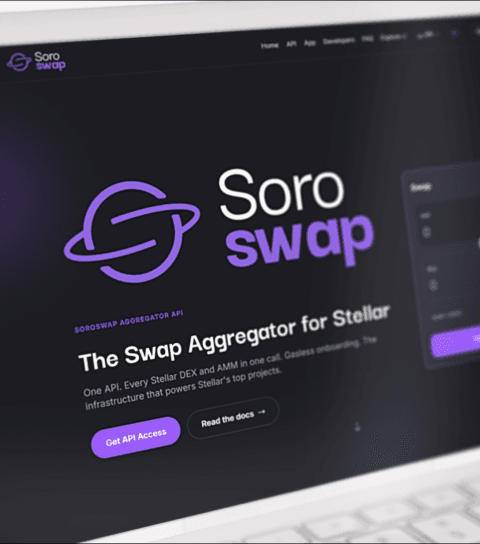
Soroswap
At a glance
- Same-day integration, cold start to first live trade
- 2 dependencies added, roughly 100 KB
- Around 300 lines of contact with existing code
- No wallet or network SDKs, no signing changes
- One public base URL, no API key required
- Existing aggregation path untouched
For DEXs and aggregators that want to list assets whose liquidity sits on other networks, without building a bridge, bootstrapping a pool, or changing how their existing routing works.
About Soroswap
For DEXs and aggregators that want to list assets whose liquidity sits on other networks, without building a bridge, bootstrapping a pool, or changing how their existing routing works.
The Challenge
Soroswap aggregates Stellar liquidity. SODA is live on Stellar as a classic asset, but its depth is not on Stellar.
SODA has no meaningful AMM pool depth on Stellar. Its liquidity sits with solvers on the SODAX hub, so an aggregator that only routes Stellar venues has nothing to quote against.
The listing had to happen inside the swap card users already use. A separate page, a second wallet connection or a transfer flow would have added a surface to learn, and surfaces that need learning do not get used.
Soroswap already owns its signing layer and pins its own version of the Stellar SDK. Any integration that brought a second wallet stack or a duplicate SDK into the bundle was not going to be mergeable.
Stellar classic assets carry 7 decimals and require a trustline on the receiving account. Cross-network pairs mix precisions and need a delivery-side check that EVM-only integrations never encounter.
The requirement was a new asset with off-network liquidity, quoted and settled inside an interface that could not change.
The Solution
Soroswap integrated the SODAX Swaps API v2 over HTTP. No new interface, and no change to the routing that was already there.
HTTP only, two dependencies
@sodax/swaps-api is a typed fetch client for the Swaps API v2, with two dependencies, roughly 100 KB, and no wallet or network SDKs. Soroswap already owned a Stellar signing layer, so it took the HTTP client and let its existing wallet code sign the unsigned transactions the API hands back.
Asset-conditional routing
The swap controller checks the pair. SODA pairs route through SODAX, and every other pair follows the Soroswap aggregation path exactly as before. Three touch points, around 300 lines of contact with existing code.
One lifecycle, Stellar specifics handled
Nine thin server routes keep the base URL server-side, and one state machine mirrors the step and error shape of the existing swap flow, so both paths behave the same way for users and maintainers. The care went into Stellar-side detail: check the destination trustline before creating the intent, read decimals off each token record because Stellar assets are 7 not 18, and fetch the deadline last so wallet prompts do not eat the 300 second window.
Shipped behind one environment variable
SODA appears only on a mainnet deployment, with a backend URL configured, and only when the live API lists it. Fail any one and the application behaves exactly as it did before, which turned the merge decision into whether to set one variable. No API key, and the value never reaches the browser.
The Results
Live in a single day
From cold start to a filled trade on mainnet, using the Swaps API over HTTP.
SODA tradeable on Stellar
Stellar users buy and sell SODA in the Soroswap swap card they already use, with no new page and no second wallet connection.
Around 80 seconds end to end
XLM to SODA, verified on mainnet with real funds and the intent confirmed solved.
100 KB of footprint
Two dependencies, with no wallet or network SDKs and no second copy of the Stellar SDK in the bundle.
Zero changes to existing routing
Every non-SODA pair follows the Soroswap aggregation path exactly as before.
No signing work
The API hands back unsigned transactions. Soroswap's existing wallet layer signs and broadcasts them unchanged.
SODAX Integration
TBD Layer
TBD
TBD
Swaps API is live. 21 endpoints, one public base URL.