Built with SODAX





























Bound
For Bitcoin-native applications that want to give BTC holders trading and money-market lending across 18+ networks, self-custodied from entry to settlement, with no wrapping and no centralized exchange in the middle.
SilkSuite
At a glance
- Self-custody cross-chain, no bridge and wait
- No bridges built, funds never held by SilkSuite
- 120 Hedera assets reachable cross-chain
- SODAX money market powers 'Earn'
For Hedera-native protocols that want to take their liquidity cross-chain in one self-custody flow, with no bridges to build and no custody to hold.
About SilkSuite
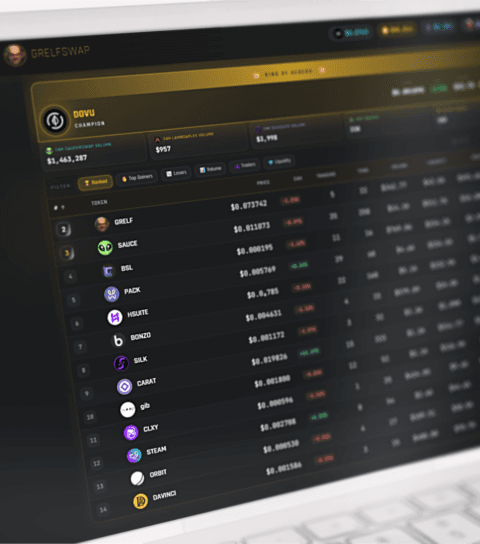
SilkSuite is a non-custodial DeFi suite native to Hedera, combining HSuite's DEX and SilkSwap. Its exchange, SilkDex, runs deep liquidity across SILK and around 120 Hedera pool assets, with zero slippage.
Every trade settles atomically on Hedera's native ledger, priced by independent smart nodes and signed locally, so keys and tokens never leave your control. SilkSuite also offers a launchpad, liquidity rewards, and analytics.
The Challenge
SilkSuite has deep Hedera liquidity and one hard problem: getting it off Hedera without building bridges or taking custody of user funds.
Hedera-native liquidity is stuck on Hedera.
Bridges are complex, risky, and mean taking custody.
Most Hedera accounts use ED25519 keys, which tooling excludes.
The Solution
SilkSuite uses SODAX as its cross-chain settlement layer, plugging SilkDex's own liquidity into a self-custody interface.
Any SilkDex asset, cross-chain in one flow
Through the s0xchange desk, a user can take any SilkDex pool asset cross-chain in a single flow, swapped into a bridge asset on Hedera. It is self-custody, with no bridge-and-wait and funds never held by SilkSuite.
Two-way reach into Hedera
The flow also works in reverse, bringing external assets into Hedera and directly into SilkDex's pools, so liquidity can move both onto and off of Hedera.
Native Hedera wallet support
SilkSuite implemented a custom wallet provider that takes SODAX's raw call data and submits it through Hedera's native transaction API. So every Hedera account can use SODAX, ED25519 keys included.
Cross-chain Earn and best execution
SilkSuite surfaces SODAX's money market for its Earn feature, and on the Ultra desk SODAX runs as one of several routers raced for best execution.
The Results
From Hedera-native to cross-chain
SilkDex's liquidity can now leave Hedera and reach any supported chain without a single bridge to operate.
Every Hedera account included
Routing calls through Hedera's native API brings the ED25519 majority into cross-chain DeFi.
Wider reach, better execution
SODAX is raced for best execution on the Ultra desk, and its money market powers Earn.
Feedback
"SODAX gave us self-custody cross-chain settlement with no bridge-and-wait, plugging SilkDex's own liquidity straight into it, even wiring up native Hedera accounts that cannot sign EVM transactions."
Chief Technology Officer, SilkSuite
Built on the SODAX API
One API for cross-network execution and liquidity. Start free with your own API key.